Your informational website should already be doing an important job. It communicates what you offer, builds confidence, answers questions, and guides the right visitors toward taking action.
But it can also support what happens around that conversion. During consultations, business owners are often surprised by the additional functions that can be built into their website. Scheduling, payments, client access, automated social content, smarter forms, and digital products can all become part of the same website, helping create a smoother workflow for both the business and the customer.
Add scheduling & booking links
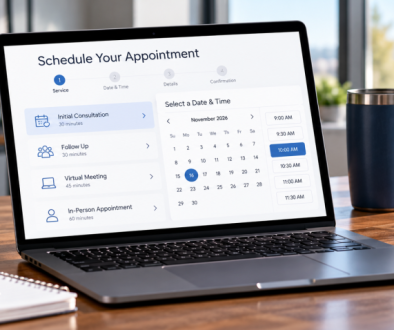
Your website can connect directly to the scheduling system you already use. Visitors can book a consultation, appointment, class, or service without waiting for you to respond with available times.
Depending on the system, you can also collect intake information, send confirmations and reminders, or require a deposit during booking.
Collect payments from your website
You do not need a full online store to accept payments through your website.
Add payment buttons for deposits, invoices, registrations, memberships, or specific services so customers have a clear place to pay when they are ready. This can eliminate the extra step of manually sending payment instructions or links.
Link clients to your internal software
If you already use client management, accounting, medical, membership, or project management software with a customer portal, your website can become the easy access point.
Add a client login or portal button so customers know exactly where to go to view invoices, access documents, check project information, complete forms, or manage their account.
Add an automatically updating Instagram gallery
If you are already posting regularly on Instagram, those posts can automatically feed into a gallery on your website.
This works especially well for businesses that regularly share projects, products, food, events, beauty work, or other visual content. Instead of updating the same content in two places, you post to Instagram and the website gallery updates with it.
Use forms to collect the right information upfront
Website forms can do much more than collect a name, email address, and message.
They can ask service specific questions, collect project details, accept file uploads, qualify inquiries, or gather the information you normally have to request later. A well planned form can make the first conversation more productive because you already have the details you need.
Sell and share digital products
Your informational website can also give customers direct access to products and resources.
You can sell or share guides, templates, workbooks, event tickets, gift certificates, courses, memberships, downloadable files, or other digital resources. Paid items can be purchased and delivered automatically, while free resources can be made available immediately without requiring you to send them manually.
Your website is already part of how people learn about your business and decide whether to take the next step. Adding the right functionality can extend that role into the way your business actually operates.
Look at the small tasks you repeat throughout the week, scheduling, sending payment links, directing clients to portals, collecting information, sharing files, or updating content. In many cases, your website can help streamline those steps while creating an easier experience for your customers at the same time.